

“Much on earth is hidden from us, but to make up for that we have been given a precious mystic sense of our living bond with the other world, with the higher heavenly world, and the roots of our thoughts and feelings are not here but in other worlds. That is why the philosophers say that we cannot apprehend the reality of things on earth. God took seeds from different worlds and sowed them on this earth, and His garden grew up and everything came up that could come up, but what grows lives and is alive only through the feeling of its contact with other mysterious worlds. If that feeling grows weak or is destroyed in you, the heavenly growth will die away in you. Then you will be indifferent to life and even grow to hate it. That’s what I think.” – Elder Zosima, The Brothers Karamazov
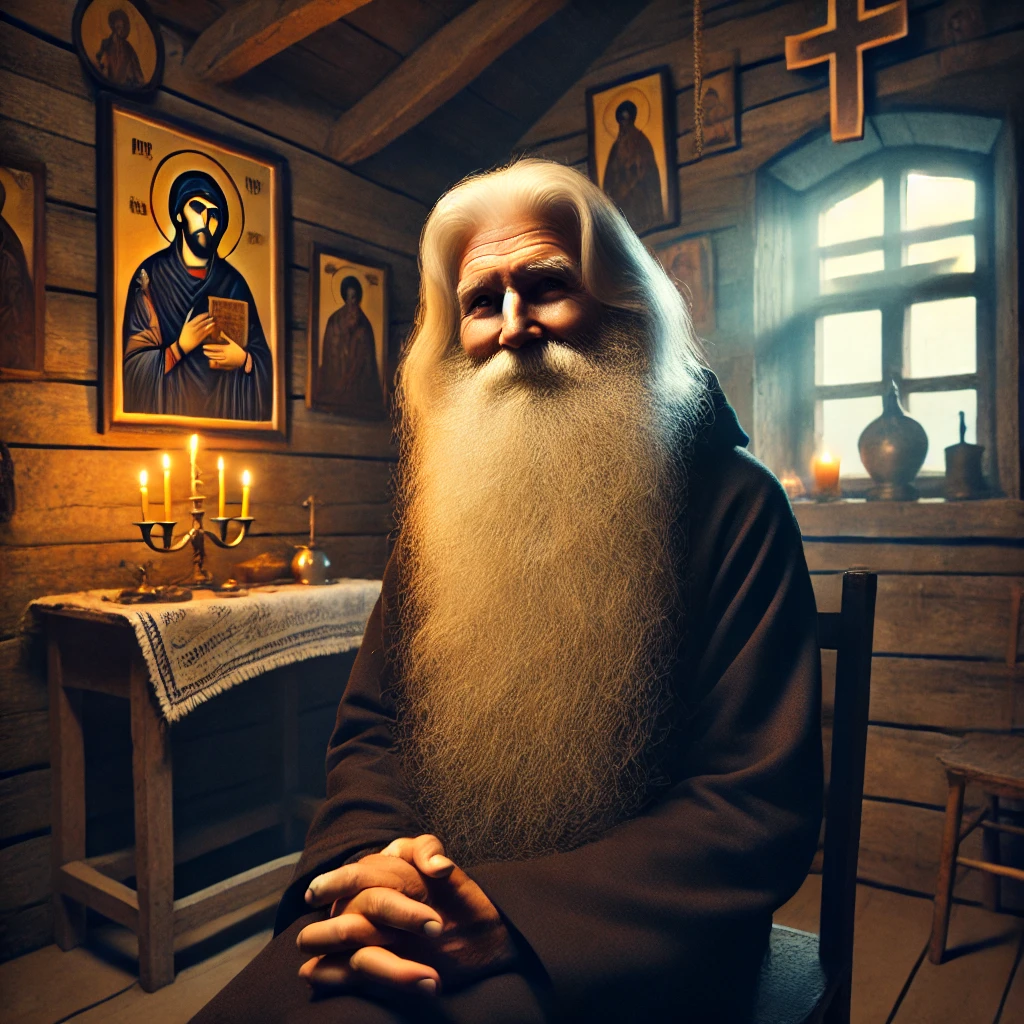
This little excerpt originates from one of the pre-mortem sermons by Elder Zosima, one of the most philosophical characters in Fyodor Dostoevsky’s book, The Brothers Karamazov. It particularly caught my attention due to my ongoing interest in the question of the limits of human knowledge, and this piece contains a wealth of philosophical meaning worth examining and understanding. It reveals Zosima’s key ontological and epistemological assumptions of the origins of our world, and the ways human beings can understand it.
Ontologically speaking, this passage contains two presumptions. First, humans are inherently religious; they cannot live fully without faith. Second, the passage explores the heavenly origins of our world and everything we observe within it. It complements and clarifies Zosima’s epistemological beliefs, which are rooted in epistemological modesty—a philosophical position that posits that causal links and explanations of phenomena are often opaque and inaccessible to us.
Ontology
For the Elder, the foundations of human experiences (and most certainly humans themselves) are external to the human physical bodies or the world around them; he writes: “the roots of our thoughts and feelings are not here but in other worlds.” Moreover, the very substance of this world springs from the divine, not from the material: “God took seeds from different worlds and sowed them on this earth.”
Elder Zosima presents a familiar Christian worldview, which is not surprising in itself, but his further conclusions hold greater interest. Zosima explains that since the origins of human perceptions are outerworldly, they always seek and desire the outerworldly connection: “what grows lives and is alive only through the feeling of its contact with other mysterious worlds.” This desire is so fundamental for human well-being and life that the lack of it invariably leads to what is now called “mental health problems,” he writes: “If that feeling grows weak or is destroyed in you, the heavenly growth will die away in you. Then you will be indifferent to life and even grow to hate it.” In other words, human beings are wired to have transcendental experiences, and in his pre-mortem sermon, Elder Zosima lists some of them. In particular, he constantly emphasizes that everything around humans is divine. So does speak his late brother Markel, whose illness and death deeply influenced Elder Zosima: “Yes, he said, there was Godly glory around me: birds, trees, valleys, skies, I alone lived in shame, I alone stripped everything of dignity, I didn’t even notice all this glory and beauty.” He emphasized that he is in heaven here and now, and love is an essential part of this heaven. He teaches: “Love all God’s creation, the whole and every grain of sand in it. Love every leaf, every ray of God’s light. Love the animals, love the plants, love everything. If you love everything, you will perceive the divine mystery in things. Once you perceive it, you will begin to comprehend it better every day. And you will come at last to love the whole world with an all-embracing love.”
For Zosima, a human being is religious in nature; it echoes the thoughts of Edmund Burke, who wrote in his Reflections on the Revolution in France (1790), “…the man is by his constitution a religious animal; that atheism is against not only our reason, but our instincts; atheism cannot prevail long.” Religion gives men a structure, a sense of eternal and permanent existence in a world where everything is in a constant flux; it moves men away from the confusion of vulgar temporality of everyday routine.
Epistemology
Zosima says: “Much on earth is hidden from us….That is why the philosophers say that we cannot apprehend the reality of things on earth.” He explains it mystically, through the worldview as mentioned earlier, in which the origins of this world are divine. The way we can better understand it is through “a precious mystic sense of our living bond with the other world, with the higher heavenly world.” This epistemology is reminiscent of Roger Scruton’s, although the British philosopher does not rely on mysticism to support his argument. Scruton describes the significance of the sacred in our lives. He demonstrates how, at times, excessive rationality can even cloud our understanding of some essential human experiences, such as love, guilt, normality, sexuality, and many others. These and many other phenomena in our lives do not require scientific observation, meticulous analysis, and deconstruction to be understood. On the contrary, they exist “on the surface” of our existence, and could be understood as they present themselves to the human experience.
The experience “on the surface” is of particular interest because here we exist as agents who take command of our own destiny and operate with conceptions unreachable to science: transcended conceptions like love. This seemingly superficial perception differs from a scientific worldview, which delves deeper than a surface level of phenomena. In the scientific worldview, we are organisms driven by causality and governed by external laws of motion. This seemingly deeper level of analysis does not always (especially in relation to complex social experiences) help men with interpretation or decision-making in real (superficial) world. In his Sexual Desire, Scruton writes: “It is arguable that scientific penetration into the depth of things may render the surface unintelligible – or at least intelligible only slowly and painfully, and with hesitancy that undermines the immediate needs of human action.”
Elder Zosima and Roger Scruton are not making precisely the same argument, but come to a similar conclusion: some things in this world (and, perhaps, for Zosima, most things) cannot be entirely rationally understood by human beings. They are of a different kind, and logical deconstruction will only harm the complete understanding of them.



Leave a Reply